
Live Life with Confidence Every Day
Helping You Do the Things That Matter Most
From childhood development to adult rehabilitation, we provide evidence-based occupational therapy tailored to your unique needs, including convenient home visits—helping you gain confidence, improve your independence, and enjoy a better quality of life.
HPCSA No. 00 92 61 4
Practice No.: 0934992
Cash • Cards • Medical Aid Accepted
About
OT Angel Sihlangu
we provide professional occupational therapy services to children and adults, helping them overcome physical, developmental, neurological, and cognitive challenges through personalised, evidence-based care.With over 10 years of clinical experience, Angel provides compassionate occupational therapy care from our practice in Windmill Park, Boksburg, tailored to each client’s unique goals—from developmental assessments and sensory integration for children to stroke rehabilitation, hand therapy, and workplace rehabilitation for adults.To make therapy more accessible and convenient, we also offer home visits and workplace assessments, bringing professional occupational therapy services directly to where they’re needed most.Based in Windmill Park, Boksburg, Gauteng, we provide professional occupational therapy services to clients locally and surrounding areas.
Appointments only — no walk-ins.
Our services
Occupational therapy helps people of all ages become more independent in their everyday lives. Whether it's a child learning to play, write, and succeed at school, or an adult recovering from an injury, illness, or disability, occupational therapy helps people develop, regain, or improve the skills they need for daily living.we provide personalised care through our Children's Occupational Therapy, Adult Occupational Therapy, and Specialised Occupational Therapy Services, helping clients of all ages build confidence, independence, and meaningful participation in everyday life.

1. Learning difficulties
2. Developmental delays
3. Autism Spectrum Disorder(ASD)
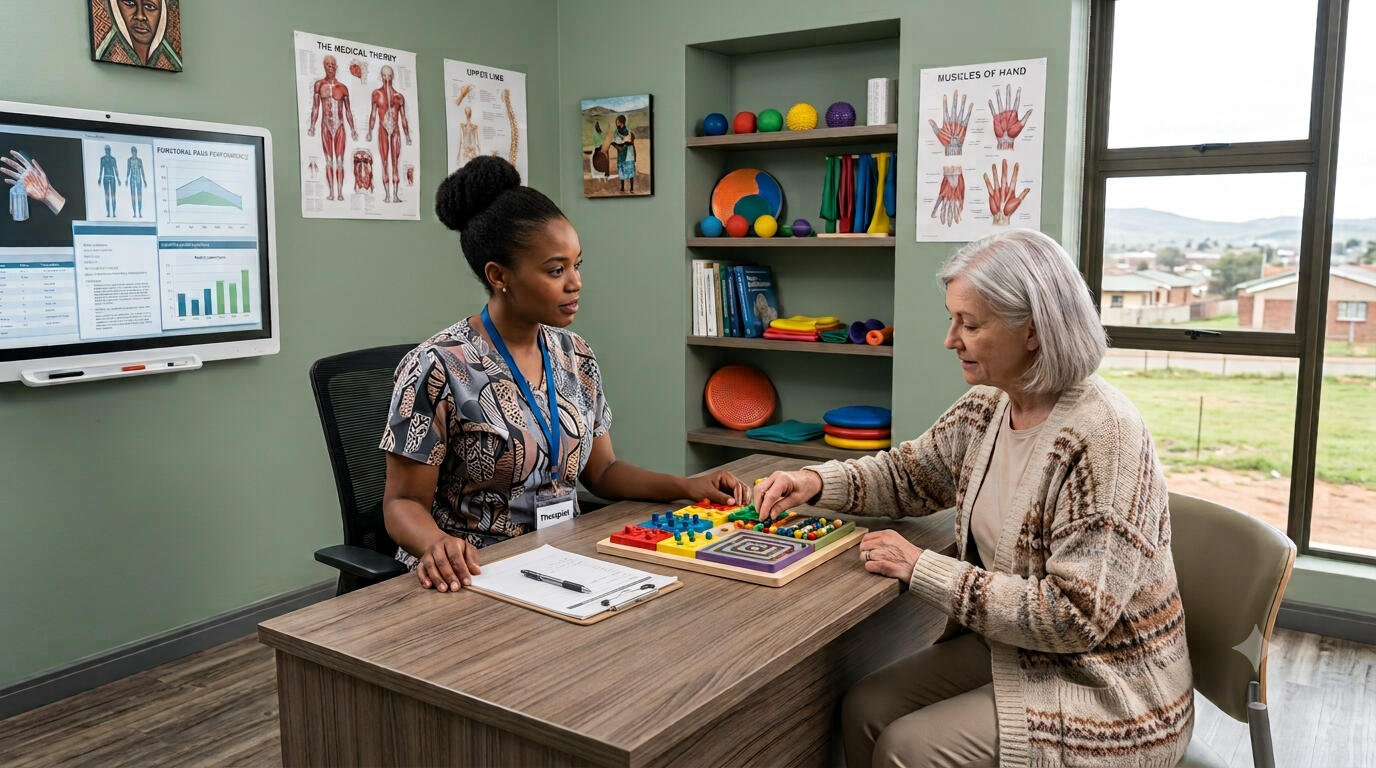

1. Medico-Legal Assessments
2. Insurance Claim Assessments
3. Functional Capacity Evaluations (FCE)
Our Process
Our therapy process is centred around understanding your unique needs and providing personalised support every step of the way. From the initial consultation and assessment to goal setting, therapy and follow-up, we work collaboratively to help you achieve meaningful progress and greater independence in everyday life.
Enquiry & Booking
Contact us to discuss your needs and book an appointment.We gather basic information and arrange a suitable date, time and location.
────────────────────
Consultation & Assessment
The occupational therapist meets with you and assesses your needs and functional difficulties.Relevant information is gathered to understand how these needs affect everyday life.
────────────────────
Treatment Planning
Your assessment findings are discussed with you.An individualised treatment plan is developed based on your needs and goals.
────────────────────
Therapy & Intervention
Occupational therapy is provided according to your treatment plan.Practical strategies, exercises, recommendations and support are provided where appropriate.
────────────────────
Review & Follow-Up
Providing intervention based on the agreed goals and treatment plan.
────────────────────
Progress Reviews
Monitoring progress and adjusting the approach where necessary.
────────────────────
Home or School Programme
Providing practical activities and strategies that can be continued outside therapy.
────────────────────
Discharge & Follow-Up
Concluding therapy when appropriate, with follow-up recommendations where needed.
Why Choose Us
Individualised Treatment Plans
HPCSA Registered

Evidence-Based Care

10+ Years of Clinical Experience

Home Visits Available
What our client say about us
"Professional, compassionate, and knowledgeable from the very first appointment. The treatment plan was tailored to my needs, and I felt supported throughout my recovery journey."
P. Mokwena
Patient
"The care and support we received made a real difference to our child's confidence and daily activities. The therapy sessions were practical, engaging, and tailored to our child's needs. We are truly grateful for the progress we've seen."
L. Khumalo
Patient's mother
""The assessment was thorough, and everything was explained in a way that was easy to understand. We received practical strategies that have helped both at home and at school. The improvement has been remarkable."
M. Dlamini
Patient
Frequently Asked Questions ( FAQS)
1. What does an occupational therapist do?
Occupational therapists help children and adults develop, regain, or maintain the skills needed for everyday life. They assess and treat physical, developmental, neurological, cognitive, and emotional challenges to improve independence and participation in daily activities.
2. Do I need a doctor's referral?
No. You do not need a doctor's referral to book an appointment. However, some medical aid schemes or specific assessments may require one. If you're unsure, we can guide you through the process.
3. How long is an assessment?
Every person is unique, so the number of therapy sessions varies depending on your condition, goals, and progress. Following your assessment, your occupational therapist will recommend a personalised treatment plan tailored to your needs.
4. How many therapy sessions will I need?
The duration of an assessment depends on the reason for your visit and the type of assessment required. Most assessments take between 45 and 90 minutes, allowing enough time for a thorough evaluation and discussion of the best treatment plan.
5. Do medical aids cover occupational therapy?
Many medical aid schemes provide benefits for occupational therapy, depending on your plan and available benefits. We recommend contacting your medical aid provider to confirm your cover and any authorisation requirements before your appointment.
6. What should I bring to my appointment?
Please bring any relevant medical reports, referral letters (if applicable), previous assessment reports, your medical aid details, and any information that may help us better understand your needs.
7. Do you offer home visits?
Yes. We offer home visits where appropriate. Home visits allow us to assess your home environment, recommend practical modifications, provide caregiver guidance, and help improve safety and independence in your daily activities.
8. Do you assess children for school readiness?
Yes. We provide comprehensive school readiness assessments to evaluate whether a child has the physical, cognitive, emotional, social, and developmental skills needed to succeed in the classroom. We also provide recommendations to support their learning journey.
9. Can adults receive occupational therapy?
Absolutely. We provide occupational therapy services for adults recovering from illness or injury, as well as those living with neurological, orthopaedic, physical, or mental health conditions. Our goal is to help you regain independence and improve your quality of life.
10. Do you provide reports for schools or insurance companies?
Yes. We prepare professional reports for schools, medical aids, insurance companies, employers, and other authorised organisations when required. These reports are based on comprehensive assessments and professional clinical findings.
Who Is Occupational Therapy For?
Our occupational therapy services support children and adults experiencing challenges that affect development, learning, independence, and everyday life. We assist children with learning difficulties, developmental delays, autism spectrum disorder (ASD), ADHD, and cerebral palsy, as well as adults requiring support for hand injuries, stroke rehabilitation, arthritis, spinal cord injuries, traumatic brain injuries, and other conditions.We also provide specialised occupational therapy services including functional capacity evaluations, medico-legal assessments, insurance claim assessments, wheelchair and seating assessments, and splinting — helping individuals improve function, independence, and participation in everyday life. smarter, sustainable fire safety solutions.
Get in Touch Today
Our Process
Our therapy process is centred around understanding your unique needs and providing personalised support every step of the way. From the initial consultation and assessment to goal setting, therapy and follow-up, we work collaboratively to help you achieve meaningful progress and greater independence in everyday life.

1. Enquiry & Booking
Contact us to discuss your needs and book an appointment.We gather basic information and arrange a suitable date, time and location.

2. Consultation & Assessment
The occupational therapist meets with you and assesses your needs and functional difficulties.Relevant information is gathered to understand how these needs affect everyday life.

3. Treatment Planning
Your assessment findings are discussed with you.An individualised treatment plan is developed based on your needs and goals.

4. Therapy & Intervention
Occupational therapy is provided according to your treatment plan.Practical strategies, exercises, recommendations and support are provided where appropriate.

5. Review & Follow-Up
Your progress is reviewed and your treatment plan adjusted when necessary.
Further recommendations, follow-up sessions or discharge are arranged according to your needs
IMPORTANT APPOINTMENT INFORMATION
All occupational therapy services are provided by appointment only. Walk-in consultations are not available.Appointments may take place at our facilities, your home, or your workplace, depending on the service and your individual needs. Home and workplace visits are subject to availability and applicable terms and conditions.
applicable terms and conditions.
Cash • Cards • Medical Aid Accepted
Children's Occupational Therapy
Every child deserves the opportunity to learn, play, and grow with confidence. We work closely with children and their families to support their development, build everyday skills, and promote greater independence through personalised, child-centred occupational therapy.
Cash • Cards • Medical Aid Accepted
Cerebral Palsy
Learning Difficulties
Developmental Delays
Autism Spectrum Disorder (ASD)
Attention Deficit Hyperactivity Disorder (ADHD)
Additional Areas of Support
Occupational therapy can support children with a wide range of developmental, sensory and functional needs. In addition to our key services above, support may also be provided for reading and fine motor difficulties, school readiness and school placement assessments, burn injuries, sensory integration needs, and parent guidance and coaching. These areas of support are considered according to each child's individual needs, with the focus on helping them participate more confidently and independently in everyday activities, at home and at school.
Adult Occupational Therapy
Life's challenges can make everyday activities more difficult than they should be. Our occupational therapy services are designed to help adults improve independence, restore confidence, and find practical solutions that make daily life easier at home, at work, and in the community.
Cash • Cards • Medical Aid Accepted
Arthritis
Depression
Hand Injuries
Spinal Cord Injuries
Stroke Rehabilitation
Additional Areas of Support
Occupational therapy can support adults with a wide range of physical, cognitive and emotional needs. In addition to our key services above, support may also be provided for traumatic brain injuries, anxiety disorders, and burnout and stress management. These areas of support are considered according to each individual's needs, with the focus on helping them participate more confidently and independently in everyday activities, at home, at work, and within the community.
Medico-Legal & Functional Assessments
Accurate assessments are the foundation of effective care and informed decision-making. We provide comprehensive, professional evaluations with clear, evidence-based reports to support rehabilitation, workplace, insurance, and legal requirements.
Cash • Cards • Medical Aid Accepted
Splinting
Medico-Legal Assessments
Insurance Claim Assessments
Wheelchair Assessment & Seating
Functional Capacity Evaluation (FCE)
Additional Areas of Support
Occupational therapy can provide specialised support for a wide range of functional and medical needs. In addition to our key services above, support may also be provided for pressure garments and scar management, confirmation of disability, and home visits. These areas of support are considered according to each individual's needs, with the focus on promoting greater comfort, safety, independence and participation in everyday activities and environments.
Frequently Asked Questions ( FAQS)
1. What does an occupational therapist do?
Occupational therapists help children and adults develop, regain, or maintain the skills needed for everyday life. They assess and treat physical, developmental, neurological, cognitive, and emotional challenges to improve independence and participation in daily activities.
2. Do I need a doctor's referral?
No. You do not need a doctor's referral to book an appointment. However, some medical aid schemes or specific assessments may require one. If you're unsure, we can guide you through the process.
3. How long is an assessment?
Every person is unique, so the number of therapy sessions varies depending on your condition, goals, and progress. Following your assessment, your occupational therapist will recommend a personalised treatment plan tailored to your needs.
4. How many therapy sessions will I need?
The duration of an assessment depends on the reason for your visit and the type of assessment required. Most assessments take between 45 and 90 minutes, allowing enough time for a thorough evaluation and discussion of the best treatment plan.
5. Do medical aids cover occupational therapy?
Many medical aid schemes provide benefits for occupational therapy, depending on your plan and available benefits. We recommend contacting your medical aid provider to confirm your cover and any authorisation requirements before your appointment.
6. What should I bring to my appointment?
Please bring any relevant medical reports, referral letters (if applicable), previous assessment reports, your medical aid details, and any information that may help us better understand your needs.
7. Do you offer home visits?
8. Do you assess children for school readiness?
Yes. We offer home visits where appropriate. Home visits allow us to assess your home environment, recommend practical modifications, provide caregiver guidance, and help improve safety and independence in your daily activities.
Yes. We provide comprehensive school readiness assessments to evaluate whether a child has the physical, cognitive, emotional, social, and developmental skills needed to succeed in the classroom. We also provide recommendations to support their learning journey.
9. Can adults receive occupational therapy?
Absolutely. We provide occupational therapy services for adults recovering from illness or injury, as well as those living with neurological, orthopaedic, physical, or mental health conditions. Our goal is to help you regain independence and improve your quality of life.
10. Do you provide reports for schools or insurance companies?
Yes. We prepare professional reports for schools, medical aids, insurance companies, employers, and other authorised organisations when required. These reports are based on comprehensive assessments and professional clinical findings.
Occupational therapy blog
Occupational therapy is about helping people overcome challenges, build independence, and take part in the activities that matter most in everyday life. In this section, we explore helpful information, practical insights, and guidance to help you better understand occupational therapy and how it can support children and adults in reaching their full potential.
Does My Child Need Occupational Therapy? Signs Parents Should Look Out For
Children develop at different rates, but ongoing difficulties with everyday activities, learning or movement may indicate that a child could benefit from occupational therapy.
When Does an Adult Need Occupational Therapy?
Occupational therapy can help adults regain independence when an injury, illness or disability affects their ability to manage everyday activities.
What Is a Functional Capacity Evaluation (FCE)?
Occupational therapy can help adults regain independence when an injury, illness or disability affects their ability to manage everyday activities.
About Us

we are passionate about helping children and adults overcome physical, developmental, neurological, and cognitive challenges so they can live more independent and fulfilling lives.Founded by Angel Sihlangu, a qualified Occupational Therapist with over 10 years of clinical experience, our practice provides evidence-based occupational therapy services tailored to each client's unique needs and goals.From developmental assessments for children to stroke rehabilitation, hand therapy, sensory integration, and workplace rehabilitation for adults, we are committed to delivering compassionate care that makes a real difference.Our approach is simple: listen, assess, support, and empower. Every treatment plan is personalised to help our clients build confidence, improve function, and achieve greater independence.We also understand that every client's circumstances are different. That's why we offer home visits and workplace assessments where appropriate, making occupational therapy more accessible, convenient, and relevant to each person's daily environment. By delivering care where it's needed most, we help clients achieve meaningful improvements that support greater independence and quality of life.Based in Windmill Park, Boksburg, Gauteng, we provide professional occupational therapy services to clients locally and across South Africa by appointment.
Vision
Our vision is to be a trusted and leading occupational therapy practice recognised for
excellence, innovation, professionalism, and compassionate care.We aspire to create a community where every child has the opportunity to reach their
developmental potential and every adult is empowered to live, work, and participate
independently, regardless of physical, cognitive, emotional, or developmental challenges.We strive to make occupational therapy accessible, impactful, and life-changing through
personalised care, continuous learning, and strong partnerships with families, schools,
healthcare providers, and organisations.
Mision
Our mission is to provide compassionate, evidence-based, and client-centred occupational
therapy services that empower children and adults to achieve independence, participate fully
in meaningful daily activities, and improve their overall quality of life.We are committed to delivering high-quality assessments, rehabilitation, education, and
support while working collaboratively with individuals, families, schools, healthcare
professionals, employers, and communities.
Why choose us
1. Home Visits Available.
2. Family-Centred Approach
3. Medico-Legal Experience
4. School & Workplace Assessments
5. Compassionate & Professional Care
Services
we provide personalised care through our Children's Occupational Therapy, Adult Occupational Therapy, and Specialised Occupational Therapy Services, helping clients of all ages build confidence, independence, and meaningful participation in everyday life.
Children's Occupational Therapy
Every child deserves the opportunity to learn, play, and grow with confidence. We work closely with children and their families to support their development, build everyday skills, and promote greater independence through personalised, child-centred occupational therapy.
Cash • Cards • Medical Aid Accepted
Cerebral Palsy
Learning Difficulties
Developmental Delays
Autism Spectrum Disorder (ASD)
Attention Deficit Hyperactivity Disorder (ADHD)
Additional support
Occupational therapy can support children with a wide range of developmental, sensory and functional needs. In addition to our key services above, support may also be provided for reading and fine motor difficulties, school readiness and school placement assessments, burn injuries, sensory integration needs, and parent guidance and coaching. These areas of support are considered according to each child's individual needs, with the focus on helping them participate more confidently and independently in everyday activities, at home and at school.
Adult Occupational Therapy
Life's challenges can make everyday activities more difficult than they should be. Our occupational therapy services are designed to help adults improve independence, restore confidence, and find practical solutions that make daily life easier at home, at work, and in the community.
t make daily life easier at home, at
Cash • Cards • Medical Aid Accepted
Arthritis
Depression
Hand Injuries
Spinal Cord Injuries
Stroke Rehabilitation
Additional Areas of Support
Occupational therapy can support adults with a wide range of physical, cognitive and emotional needs. In addition to our key services above, support may also be provided for traumatic brain injuries, anxiety disorders, and burnout and stress management. These areas of support are considered according to each individual's needs, with the focus on helping them participate more confidently and independently in everyday activities, at home, at work, and within the community.
Medico-Legal & Functional Assessments
Accurate assessments are the foundation of effective care and informed decision-making. We provide comprehensive, professional evaluations with clear, evidence-based reports to support rehabilitation, workplace, insurance, and legal requirements.
insurance, and legal requirements.
Cash • Cards • Medical Aid Accepted
Splinting
Medico-Legal Assessments
Insurance Claim Assessments
Wheelchair Assessment & Seating
Functional Capacity Evaluation (FCE)
Additional Areas of Support
Occupational therapy can provide specialised support for a wide range of functional and medical needs. In addition to our key services above, support may also be provided for pressure garments and scar management, confirmation of disability, and home visits. These areas of support are considered according to each individual's needs, with the focus on promoting greater comfort, safety, independence and participation in everyday activities and environments.
ADHD (Attention-Deficit/Hyperactivity Disorder)
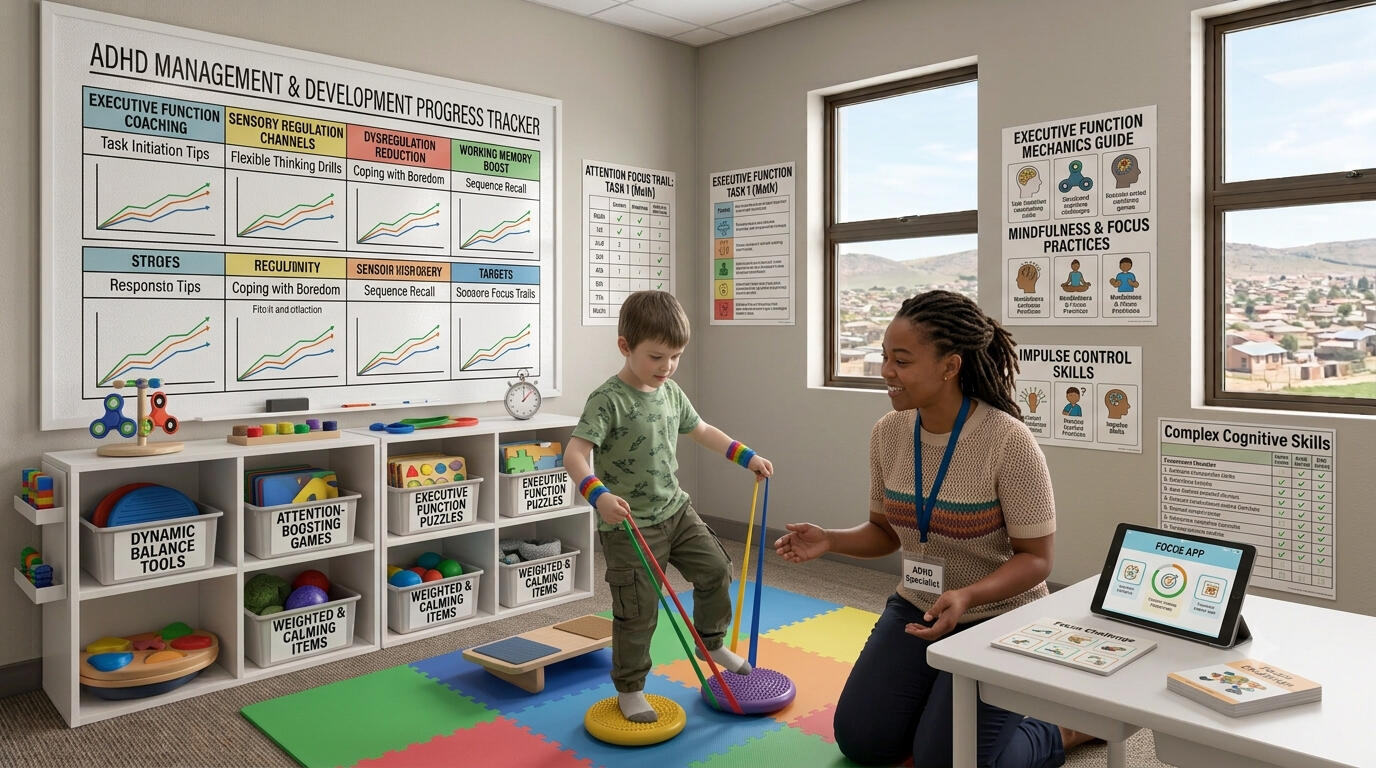
Helping Children Build Focus, Confidence and Independence
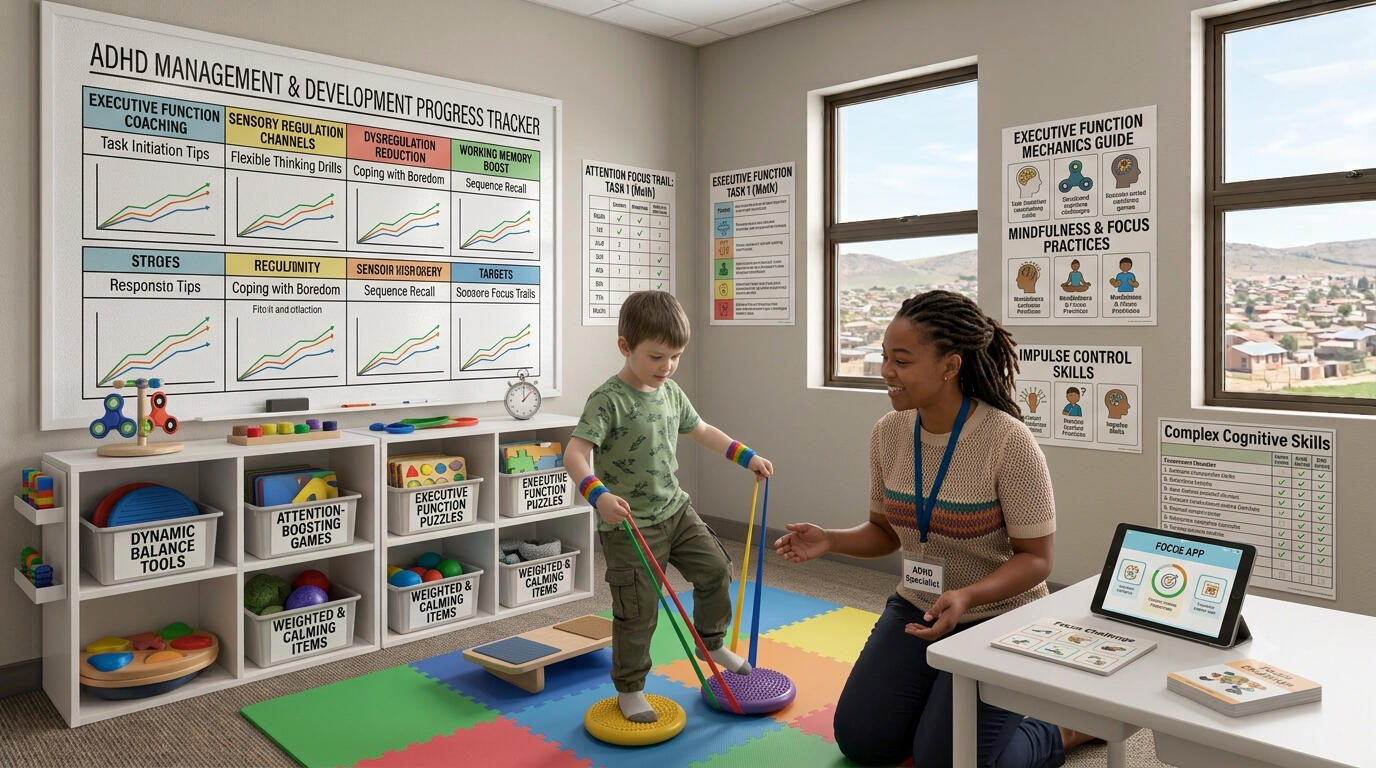
ADHD can affect a child's attention, organisation, impulse control and ability to manage everyday activities. These challenges can sometimes make it difficult for children to participate successfully at home, at school and in social environments.
How Occupational Therapy Can Help
Occupational therapy provides personalised support to help children develop practical strategies and skills for managing everyday activities. Therapy may focus on attention and concentration, organisation, sensory regulation, emotional regulation, fine motor skills and participation in school and daily routines.
Each child experiences ADHD differently. Occupational therapy therefore considers the child's individual strengths, challenges and environment when developing meaningful goals and strategies.
ADHD (Attention-Deficit/Hyperactivity Disorder)
Helping Children Build Focus, Confidence and Independence
ADHD can affect a child's attention, organisation, impulse control and ability to manage everyday activities. These challenges can sometimes make it difficult for children to participate successfully at home, at school and in social environments.
How Occupational Therapy Can Help
Occupational therapy provides personalised support to help children develop practical strategies and skills for managing everyday activities. Therapy may focus on attention and concentration, organisation, sensory regulation, emotional regulation, fine motor skills and participation in school and daily routines.
Each child experiences ADHD differently. Occupational therapy therefore considers the child's individual strengths, challenges and environment when developing meaningful goals and strategies.
Learning Difficulties
Supporting Children to Learn, Participate and Build Confidence
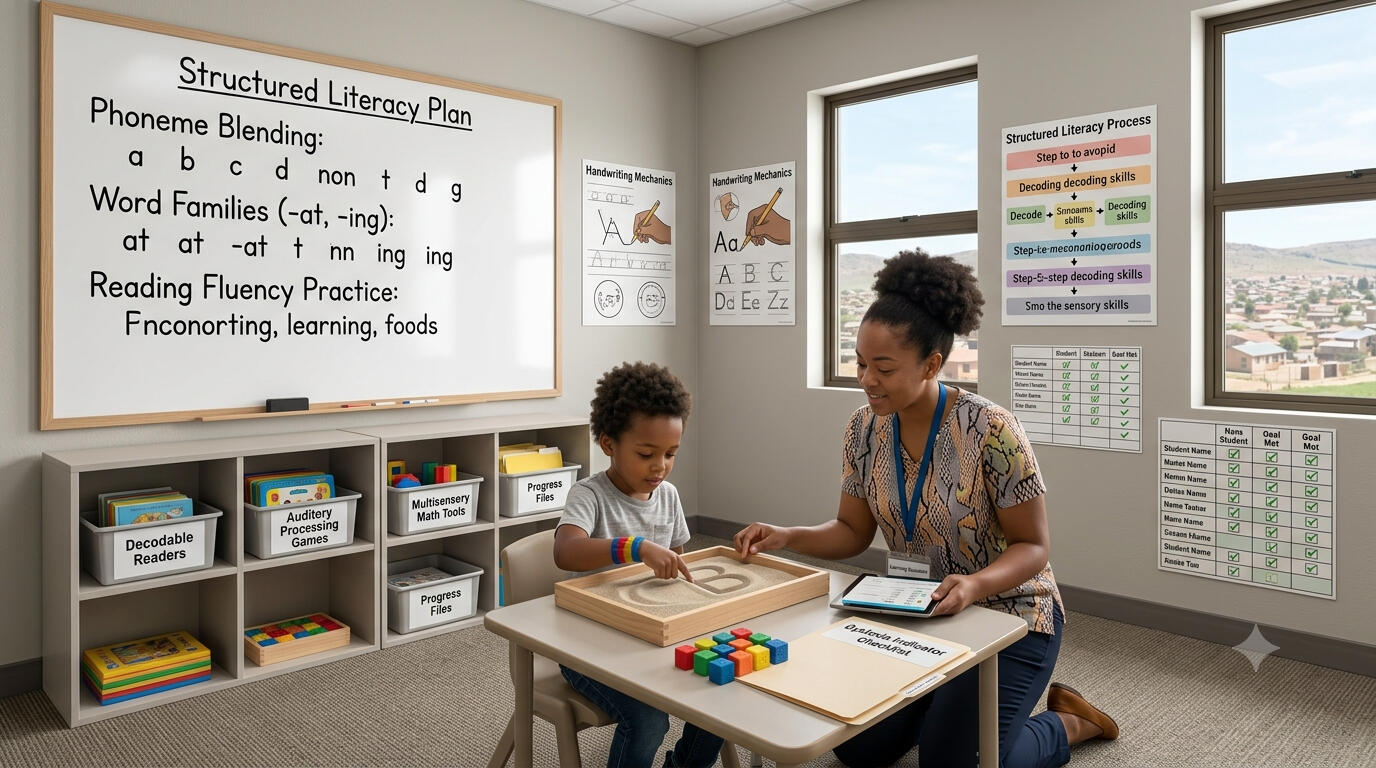
Learning difficulties can affect how a child processes information, follows instructions, completes schoolwork and develops important classroom skills. These challenges can sometimes affect a child's confidence and participation at school and at home.How Occupational Therapy Can HelpOccupational therapy looks at the specific skills and difficulties that may be affecting a child's ability to learn and participate. Support may focus on areas such as attention, fine motor skills, handwriting, visual-motor coordination, organisation and completing everyday classroom tasks.The goal is to help children develop practical skills and strategies that make learning and everyday activities more manageable.Support May Include● Fine motor and handwriting skills
● Attention and task participation
● Visual-motor and coordination skills
● Classroom and everyday independenceEvery child learns differently. Understanding their individual needs can help create a more supportive approach to learning and participation.Book a Consultation to discuss your child's needs and explore how occupational therapy may support them.
Learning Difficulties
Supporting Children to Learn, Participate and Build Confidence
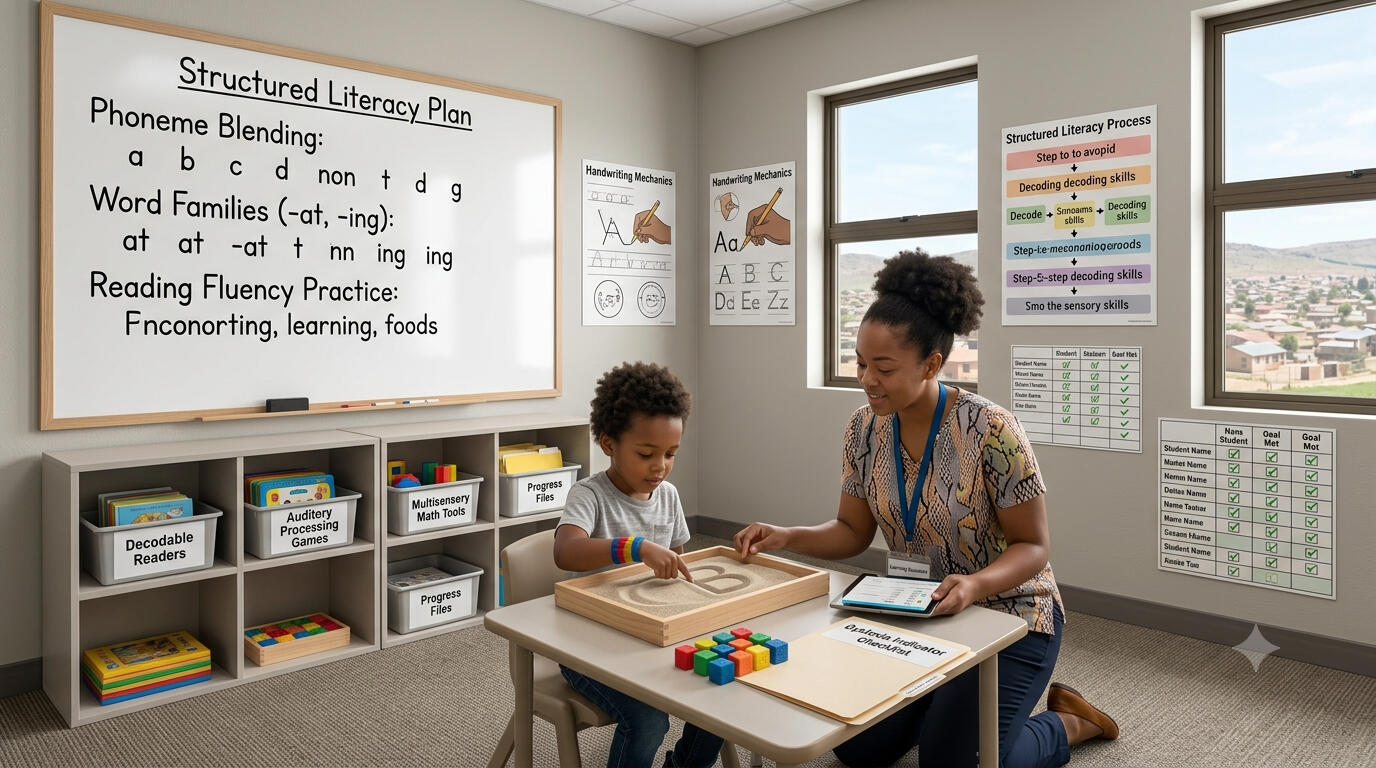
Learning difficulties can affect how a child processes information, follows instructions, completes schoolwork and develops important classroom skills. These challenges can sometimes affect a child's confidence and participation at school and at home.How Occupational Therapy Can HelpOccupational therapy looks at the specific skills and difficulties that may be affecting a child's ability to learn and participate. Support may focus on areas such as attention, fine motor skills, handwriting, visual-motor coordination, organisation and completing everyday classroom tasks.The goal is to help children develop practical skills and strategies that make learning and everyday activities more manageable.Support May Include● Fine motor and handwriting skills
● Attention and task participation
● Visual-motor and coordination skills
● Classroom and everyday independenceEvery child learns differently. Understanding their individual needs can help create a more supportive approach to learning and participation.Book a Consultation to discuss your child's needs and explore how occupational therapy may support them.
Developmental Delays
Helping Children Develop Skills, Confidence and Independence
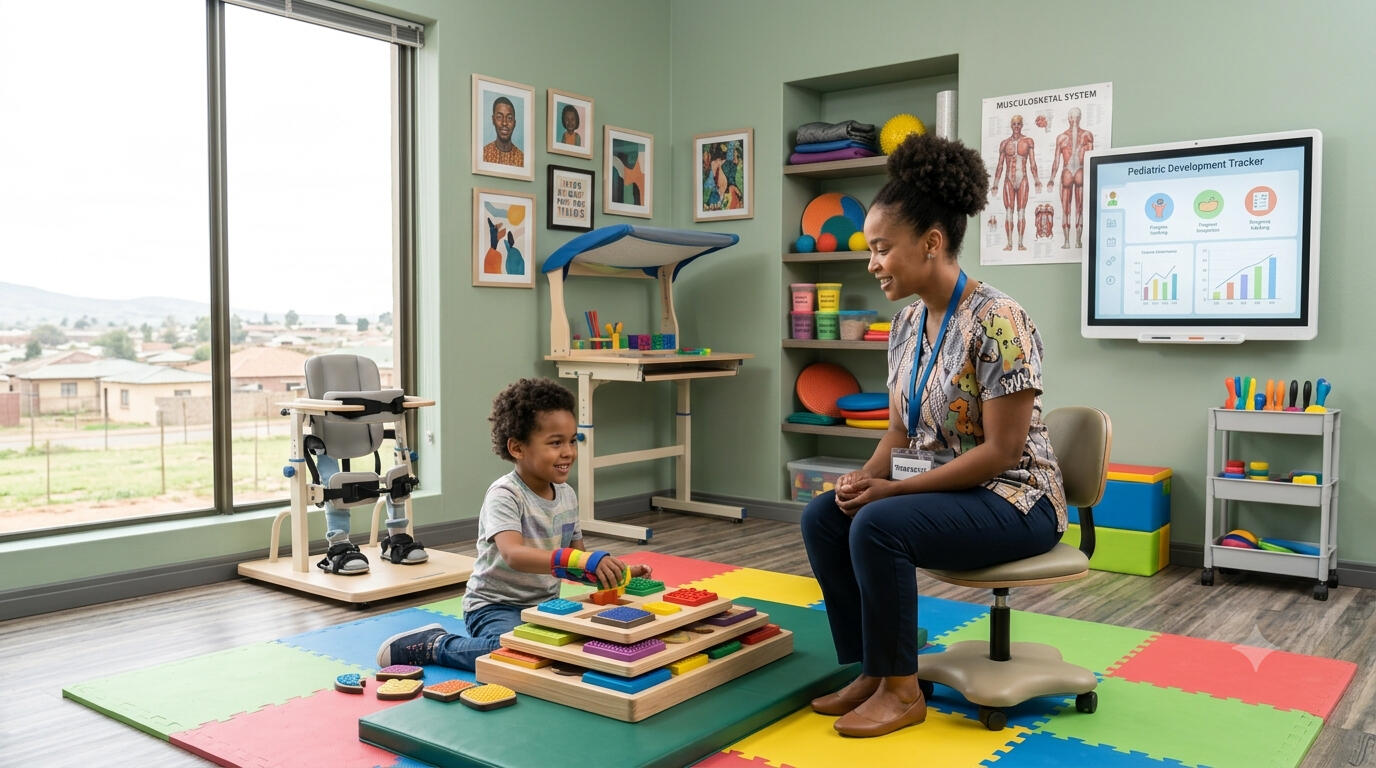
Helping Children Develop Skills, Confidence and IndependenceDevelopmental delays can affect how a child develops movement, coordination, play and everyday skills. These challenges may make it harder for a child to participate fully at home, at school and during play.How Occupational Therapy Can HelpOccupational therapy can help children develop practical skills needed for everyday activities. Therapy may focus on coordination, fine motor skills, play, movement and self-care, depending on the child's individual needs.Supporting these skills can help children participate more confidently and become more independent in their daily activities.Every child develops at their own pace. Identifying areas where additional support is needed can help encourage meaningful progress.Book a Consultation to discuss your child's development and explore how occupational therapy may support them.
Developmental Delays
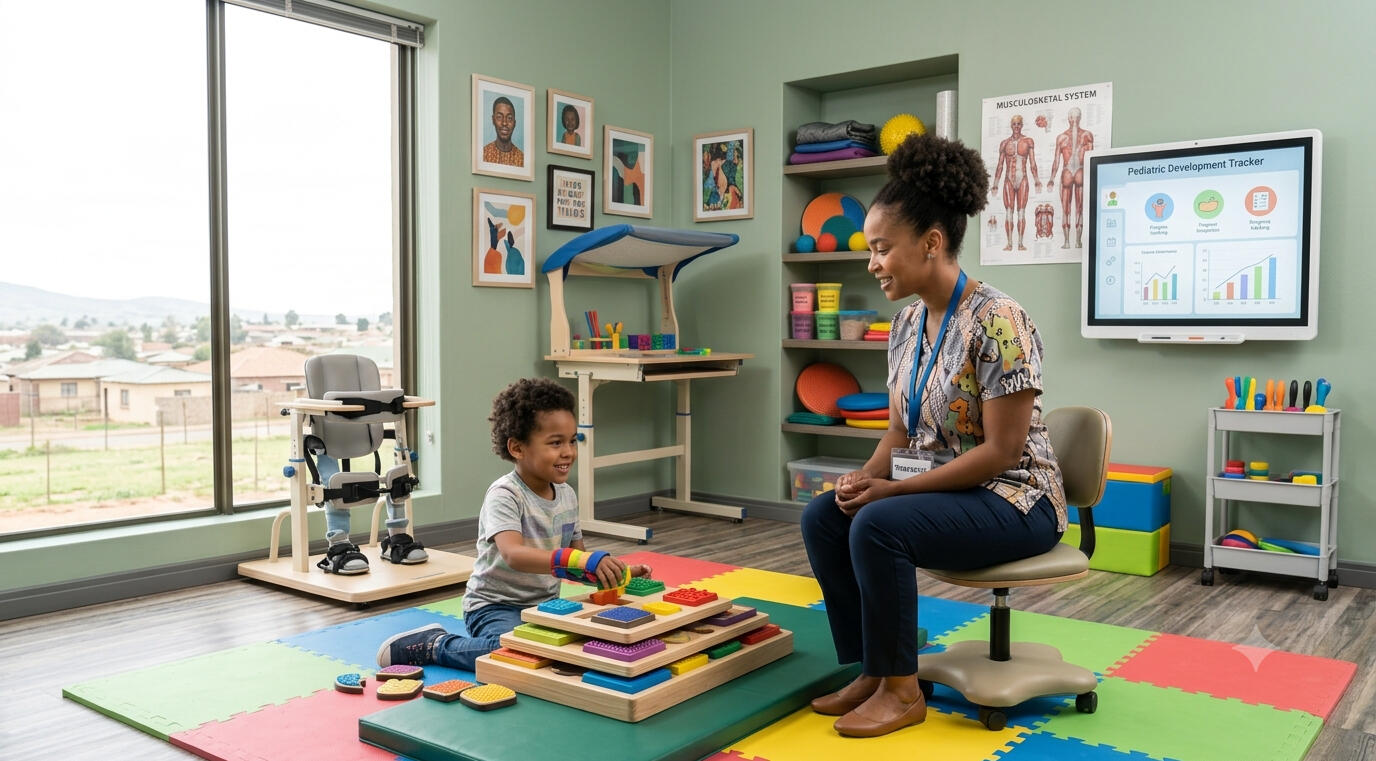
Helping Children Develop Skills, Confidence and Independence
Helping Children Develop Skills, Confidence and IndependenceDevelopmental delays can affect how a child develops movement, coordination, play and everyday skills. These challenges may make it harder for a child to participate fully at home, at school and during play.How Occupational Therapy Can HelpOccupational therapy can help children develop practical skills needed for everyday activities. Therapy may focus on coordination, fine motor skills, play, movement and self-care, depending on the child's individual needs.Supporting these skills can help children participate more confidently and become more independent in their daily activities.Every child develops at their own pace. Identifying areas where additional support is needed can help encourage meaningful progress.Book a Consultation to discuss your child's development and explore how occupational therapy may support them.
Autism Spectrum Disorder (ASD)
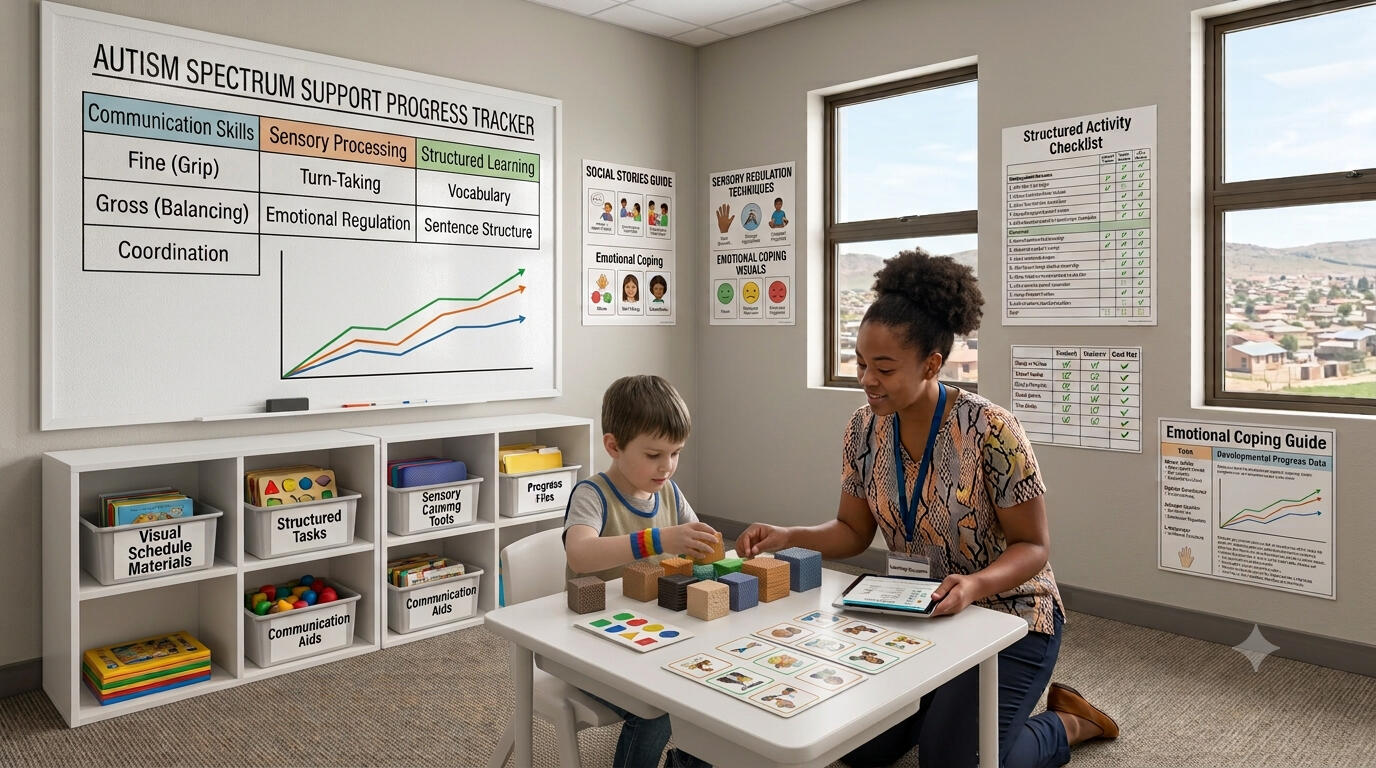
Supporting Children to Participate, Connect and Thrive
Autism Spectrum Disorder (ASD) can affect how a child experiences and responds to the world around them. Differences in sensory processing, communication, attention, play and routines may sometimes make everyday activities more challenging.How Occupational Therapy Can HelpOccupational therapy can help children manage sensory experiences, develop daily routines and participate more comfortably in activities at home, school and during play.Support is based on the child's individual sensory and functional needs, helping them develop strategies that make everyday activities more manageable.Every child with autism is different. Understanding what supports each child best can help them participate with greater comfort and confidence.Book a Consultation to discuss your child's needs and explore how occupational therapy may support them.
Autism Spectrum Disorder (ASD)
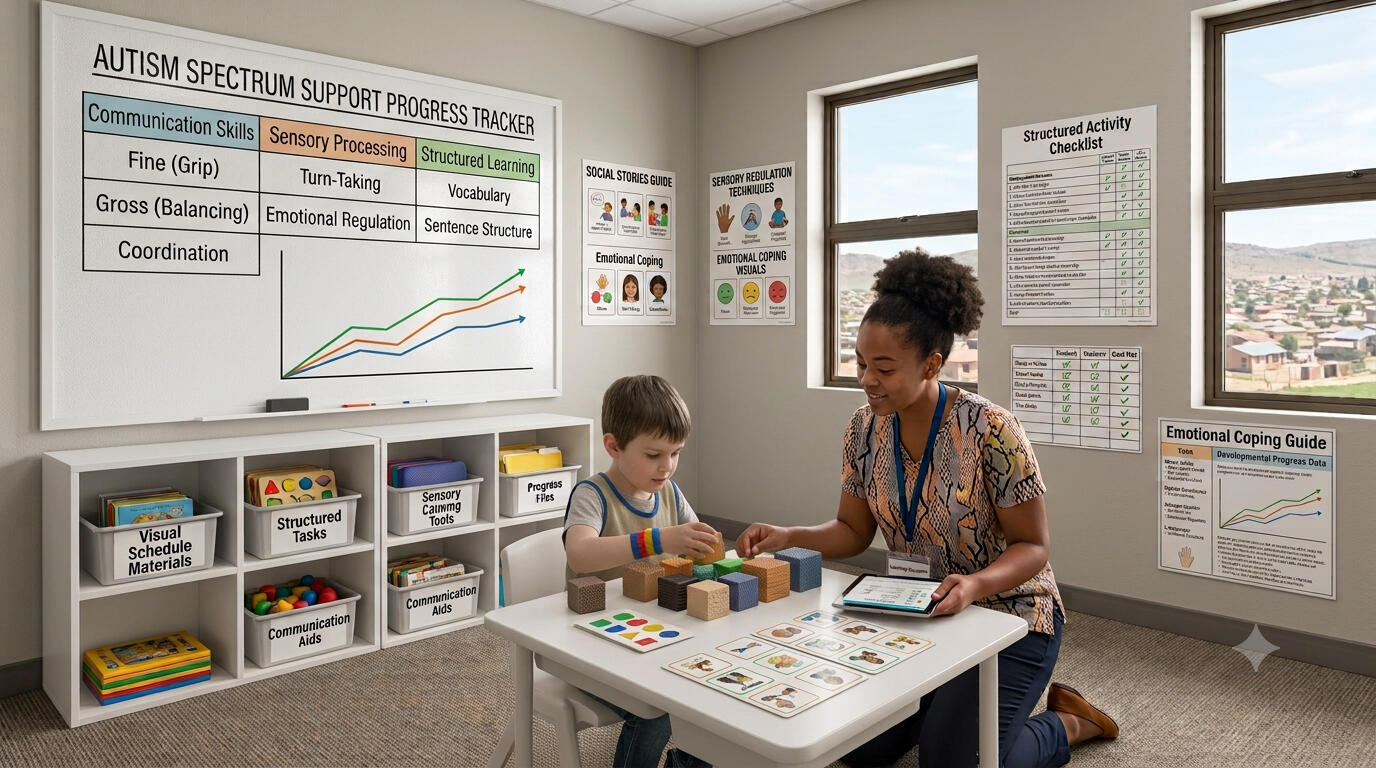
Supporting Children to Participate, Connect and Thrive
Autism Spectrum Disorder (ASD) can affect how a child experiences and responds to the world around them. Differences in sensory processing, communication, attention, play and routines may sometimes make everyday activities more challenging.How Occupational Therapy Can HelpOccupational therapy can help children manage sensory experiences, develop daily routines and participate more comfortably in activities at home, school and during play.Support is based on the child's individual sensory and functional needs, helping them develop strategies that make everyday activities more manageable.Every child with autism is different. Understanding what supports each child best can help them participate with greater comfort and confidence.Book a Consultation to discuss your child's needs and explore how occupational therapy may support them.
Cerebral Palsy

Supporting Movement, Participation and Independence
Cerebral Palsy can affect a child's movement, coordination, muscle control and ability to perform everyday activities. Depending on the child, this may affect hand use, self-care, play, school activities and independence.How Occupational Therapy Can HelpOccupational therapy focuses on helping children participate in everyday activities by working with the abilities and challenges that affect their function. Support may include hand function, coordination, self-care and strategies that make daily activities easier.The focus is on helping each child use their abilities effectively and participate as independently as possible.Every child with cerebral palsy is different. Understanding their functional needs allows therapy to focus on the activities that are most meaningful to them.Book a Consultation to discuss your child's needs and explore how occupational therapy may support their independence and participation.
Cerebral Palsy

Helping Children Focus, Participate and Manage Everyday Tasks
Cerebral Palsy can affect a child's movement, coordination, muscle control and ability to perform everyday activities. Depending on the child, this may affect hand use, self-care, play, school activities and independence.How Occupational Therapy Can HelpOccupational therapy focuses on helping children participate in everyday activities by working with the abilities and challenges that affect their function. Support may include hand function, coordination, self-care and strategies that make daily activities easier.The focus is on helping each child use their abilities effectively and participate as independently as possible.Every child with cerebral palsy is different. Understanding their functional needs allows therapy to focus on the activities that are most meaningful to them.Book a Consultation to discuss your child's needs and explore how occupational therapy may support their independence and participation.
Hands Injuries

Rebuilding Skills. Regaining Independence.
A hand injury can affect movement, strength, sensation and your ability to manage everyday activities. Occupational therapy helps you regain function and work towards returning to the activities that matter to you.How Occupational Therapy Can HelpTreatment is tailored to your injury and individual goals. Your occupational therapist may work with you to improve movement, strength and coordination while addressing pain, stiffness and difficulties using your hand during daily activities.What We Focus On● Hand and finger movement
● Strength and coordination
● Pain, stiffness and scar management
● Everyday activities, work and hobbies
● Practical adaptations where neededYour therapy focuses on helping you use your hand as effectively and independently as possible throughout your recovery.Book a consultation to discuss your hand injury and rehabilitation needs.
Hands Injuries

Rebuilding Skills. Regaining Independence.
A hand injury can affect movement, strength, sensation and your ability to manage everyday activities. Occupational therapy helps you regain function and work towards returning to the activities that matter to you.How Occupational Therapy Can HelpTreatment is tailored to your injury and individual goals. Your occupational therapist may work with you to improve movement, strength and coordination while addressing pain, stiffness and difficulties using your hand during daily activities.What We Focus On● Hand and finger movement
● Strength and coordination
● Pain, stiffness and scar management
● Everyday activities, work and hobbies
● Practical adaptations where neededYour therapy focuses on helping you use your hand as effectively and independently as possible throughout your recovery.Book a consultation to discuss your hand injury and rehabilitation needs.
Stroke Rehabilitation

Rebuilding Skills. Regaining Independence.
Stroke Rehabilitation
A stroke can affect movement, strength, coordination, sensation and the ability to manage everyday activities. Occupational therapy supports recovery by helping you regain skills and find practical ways to participate more independently in daily life.How Occupational Therapy Can HelpTherapy may focus on improving movement and coordination, particularly in an affected arm or hand, while helping you regain skills needed for activities such as dressing, bathing, grooming and meal preparation. Your therapist may also address difficulties with memory, concentration or planning.What We Focus On● Everyday activities and self-care
● Upper-limb function and coordination
● Cognitive and functional skills
● Safe participation at home and in the community
● Returning to meaningful activities or workYour programme is based on your abilities, challenges and personal goals, with progress focused on what matters most to you.Take the next step towards greater independence. Book a consultation today.
Stroke Rehabilitation

Rebuilding Skills. Regaining Independence.
A stroke can affect movement, strength, coordination, sensation and the ability to manage everyday activities. Occupational therapy supports recovery by helping you regain skills and find practical ways to participate more independently in daily life.How Occupational Therapy Can HelpTherapy may focus on improving movement and coordination, particularly in an affected arm or hand, while helping you regain skills needed for activities such as dressing, bathing, grooming and meal preparation. Your therapist may also address difficulties with memory, concentration or planning.What We Focus On● Everyday activities and self-care
● Upper-limb function and coordination
● Cognitive and functional skills
● Safe participation at home and in the community
● Returning to meaningful activities or workYour programme is based on your abilities, challenges and personal goals, with progress focused on what matters most to you.Take the next step towards greater independence. Book a consultation today.
Arthritis
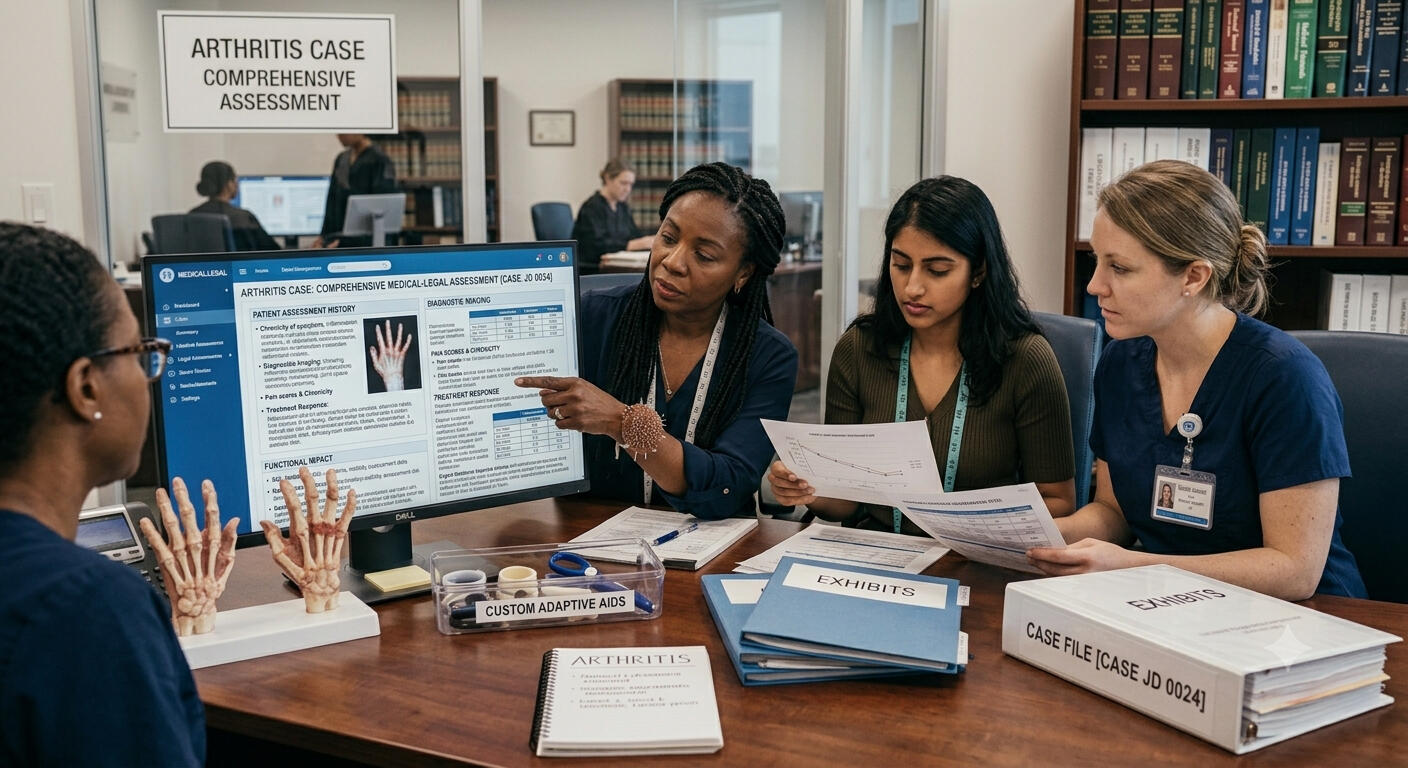
Managing Symptoms & Staying Independent
Arthritis can cause pain, stiffness and reduced movement, making everyday activities more difficult. Occupational therapy can help you manage these challenges while maintaining independence and participation in the activities that are important to you.How Occupational Therapy Can HelpYour occupational therapist can help you find practical ways to complete everyday tasks while reducing unnecessary strain on affected joints. This may include advice on joint protection, activity modification, energy conservation and the use of assistive equipment where appropriate.Making Everyday Activities EasierTherapy can look at the activities that are becoming difficult — from personal care and household tasks to work and hobbies — and identify safer, more manageable ways of completing them.The goal is to help you continue doing what matters to you while managing the impact of arthritis on your daily life.Book a consultation to discuss how occupational therapy can support you.
Arthritis
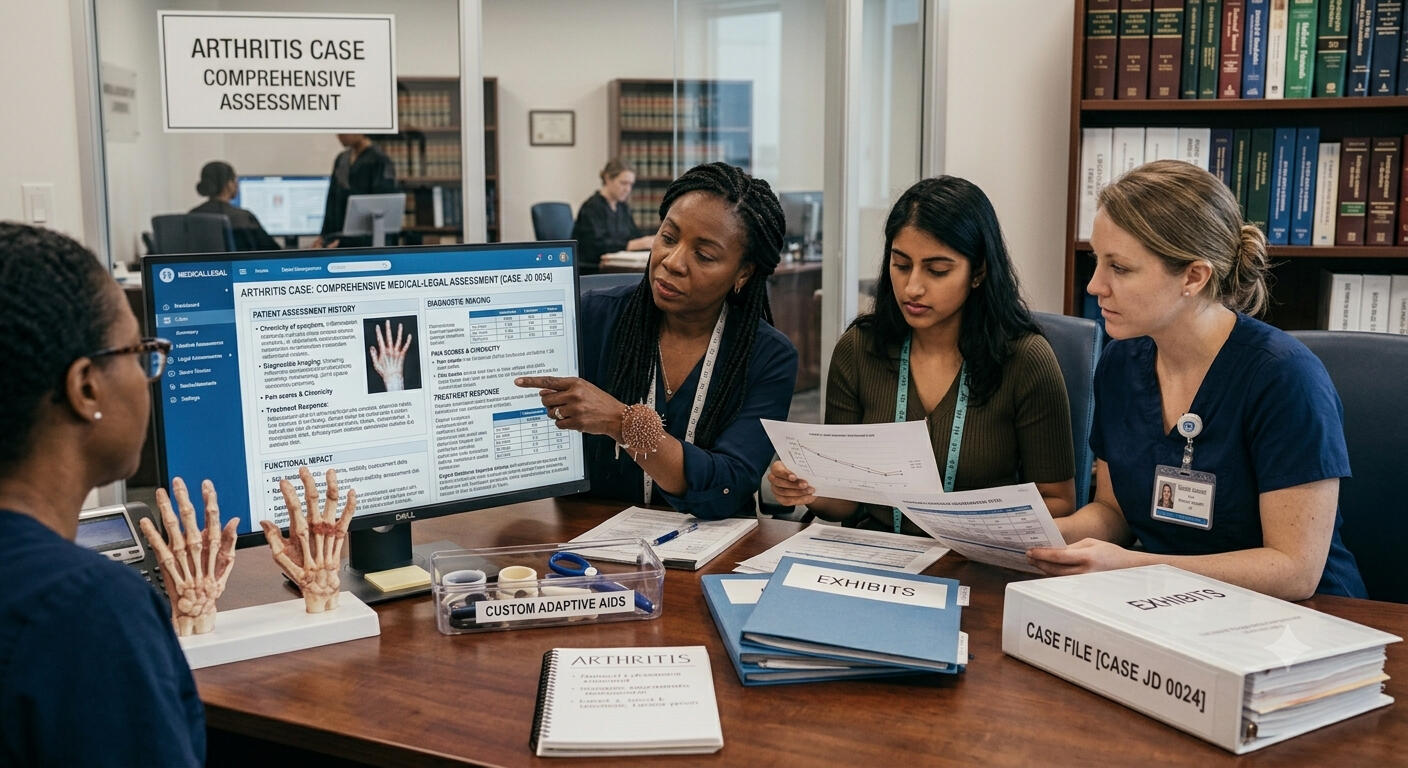
Managing Symptoms & Staying Independent
Arthritis can cause pain, stiffness and reduced movement, making everyday activities more difficult. Occupational therapy can help you manage these challenges while maintaining independence and participation in the activities that are important to you.How Occupational Therapy Can HelpYour occupational therapist can help you find practical ways to complete everyday tasks while reducing unnecessary strain on affected joints. This may include advice on joint protection, activity modification, energy conservation and the use of assistive equipment where appropriate.Making Everyday Activities EasierTherapy can look at the activities that are becoming difficult — from personal care and household tasks to work and hobbies — and identify safer, more manageable ways of completing them.The goal is to help you continue doing what matters to you while managing the impact of arthritis on your daily life.Book a consultation to discuss how occupational therapy can support you.
Spinal Cord Injuries
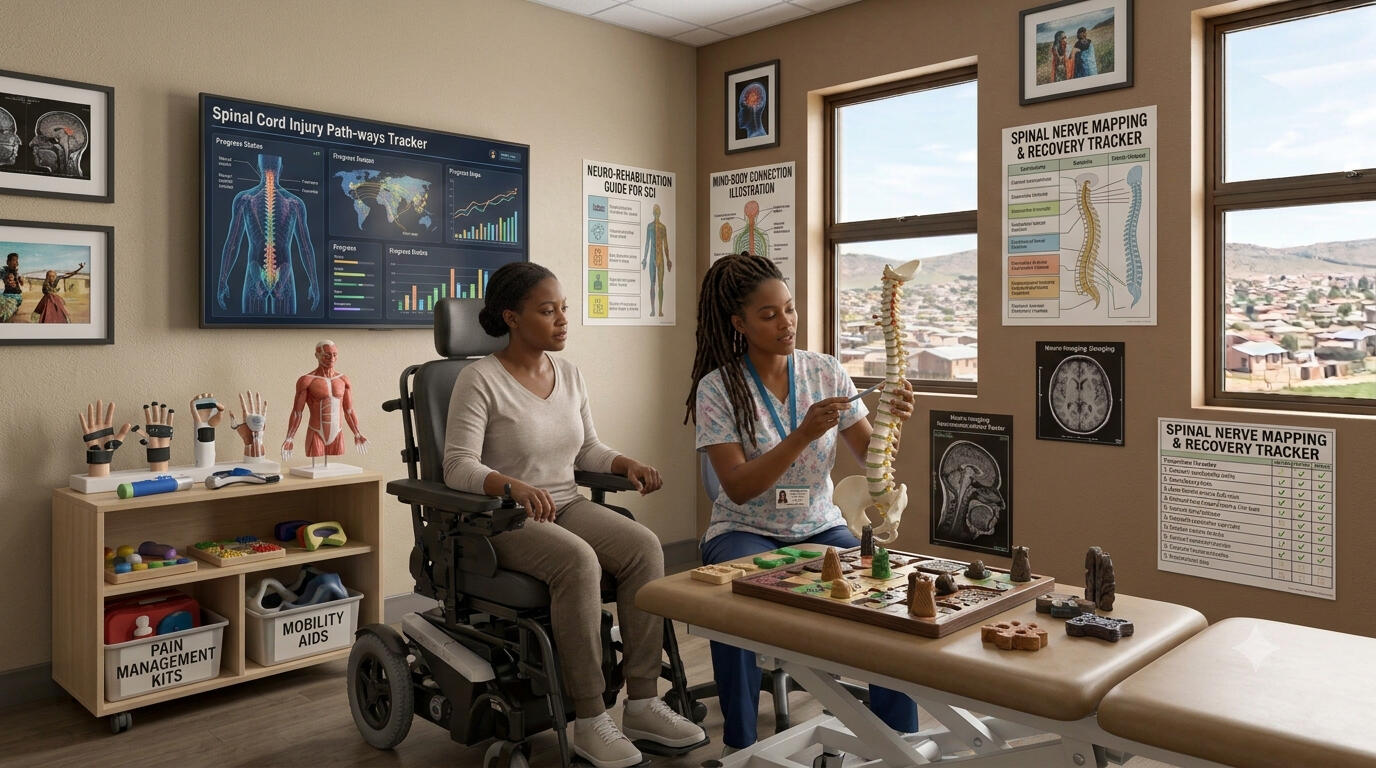
Supporting Recovery, Adaptation & Independence
A spinal cord injury can affect movement, sensation, strength and your ability to manage everyday activities. Occupational therapy helps you maximise your abilities, develop new strategies and adapt to changes following your injury.How Occupational Therapy Can HelpTreatment may focus on developing independence with personal care, transfers and everyday tasks, while also addressing upper-limb function, wheelchair skills and the use of assistive equipment.Your occupational therapist may also assess your home environment and recommend practical adaptations to improve safety, accessibility and independence.Returning to Everyday LifeRehabilitation is about more than physical recovery. It is also about helping you participate in the roles and activities that are meaningful to you — whether at home, work, in the community or during leisure activities.Your therapy programme is tailored to your abilities, environment and personal goals.Let us support you on your journey towards greater independence. Book a consultation today.
Spinal Cord Injuries
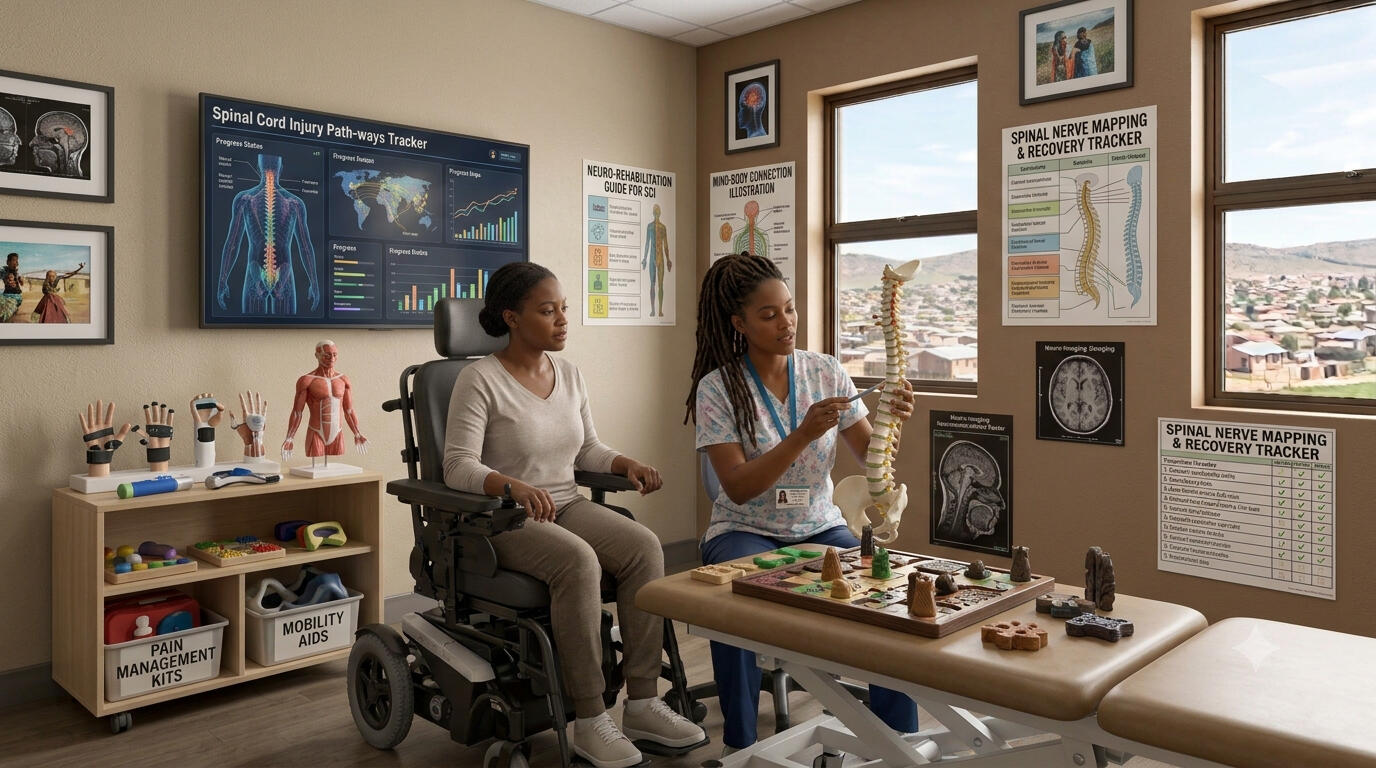
Helping You Regain Function, Strength & Independence
A spinal cord injury can affect movement, sensation, strength and your ability to manage everyday activities. Occupational therapy helps you maximise your abilities, develop new strategies and adapt to changes following your injury.How Occupational Therapy Can HelpTreatment may focus on developing independence with personal care, transfers and everyday tasks, while also addressing upper-limb function, wheelchair skills and the use of assistive equipment.Your occupational therapist may also assess your home environment and recommend practical adaptations to improve safety, accessibility and independence.Returning to Everyday LifeRehabilitation is about more than physical recovery. It is also about helping you participate in the roles and activities that are meaningful to you — whether at home, work, in the community or during leisure activities.Your therapy programme is tailored to your abilities, environment and personal goals.Let us support you on your journey towards greater independence. Book a consultation today.
Depression

Supporting Routine, Participation & Everyday Function
Depression can affect motivation, energy, concentration, routines and the ability to manage everyday responsibilities. Occupational therapy can help you rebuild manageable routines and reconnect with activities that are meaningful to you.How Occupational Therapy Can HelpYour occupational therapist can help identify how depression is affecting your daily functioning and develop practical strategies to manage everyday demands. Therapy may focus on establishing routines, managing energy, improving organisation and gradually increasing participation in meaningful activities.Reconnecting With What MattersTreatment can support participation in self-care, household responsibilities, hobbies, social activities, education or work, depending on your individual goals.The focus is on practical, achievable steps that support greater confidence, independence and participation in everyday life.If depression is affecting your daily life, book a consultation to discuss how occupational therapy may help.
Depression

Supporting Routine, Participation & Everyday Function
Depression can affect motivation, energy, concentration, routines and the ability to manage everyday responsibilities. Occupational therapy can help you rebuild manageable routines and reconnect with activities that are meaningful to you.How Occupational Therapy Can HelpYour occupational therapist can help identify how depression is affecting your daily functioning and develop practical strategies to manage everyday demands. Therapy may focus on establishing routines, managing energy, improving organisation and gradually increasing participation in meaningful activities.Reconnecting With What MattersTreatment can support participation in self-care, household responsibilities, hobbies, social activities, education or work, depending on your individual goals.The focus is on practical, achievable steps that support greater confidence, independence and participation in everyday life.If depression is affecting your daily life, book a consultation to discuss how occupational therapy may help.
Functional Capacity Evaluation (FCE)

Assessing Functional Ability & Work Capacity
A Functional Capacity Evaluation assesses an individual’s physical and functional abilities in relation to work and everyday activities. Occupational therapy can help identify functional limitations, strengths and areas where additional support may be required.How Occupational Therapy Can HelpYour occupational therapist will assess areas such as physical endurance, strength, mobility, coordination and the ability to perform specific functional tasks.The assessment can help determine whether an individual’s current abilities are consistent with the demands of their work or daily activities.Supporting Safe & Informed DecisionsFCE findings can assist with return-to-work planning, rehabilitation recommendations and identifying appropriate workplace adjustments.Each assessment is tailored to the individual's functional abilities and specific requirements.Book a consultation to discuss your Functional Capacity Evaluation.
Functional Capacity Evaluation (FCE)

Assessing Functional Ability & Work Capacity
A Functional Capacity Evaluation assesses an individual’s physical and functional abilities in relation to work and everyday activities. Occupational therapy can help identify functional limitations, strengths and areas where additional support may be required.How Occupational Therapy Can HelpYour occupational therapist will assess areas such as physical endurance, strength, mobility, coordination and the ability to perform specific functional tasks.The assessment can help determine whether an individual’s current abilities are consistent with the demands of their work or daily activities.Supporting Safe & Informed DecisionsFCE findings can assist with return-to-work planning, rehabilitation recommendations and identifying appropriate workplace adjustments.Each assessment is tailored to the individual's functional abilities and specific requirements.Book a consultation to discuss your Functional Capacity Evaluation.
Medico-Legal Assessments

Providing Clear Functional & Clinical Insight
An insurance claim assessment looks at how an injury, illness or disability affects an individual’s ability to manage everyday activities and function independently. Occupational therapy provides a practical assessment of functional abilities, limitations and support needs.How Occupational Therapy Can HelpYour occupational therapist will assess how your condition affects areas such as personal care, mobility, household activities, work and community participation.The assessment may also consider the need for assistive equipment, environmental modifications or ongoing rehabilitation.Supporting Your ClaimA clear functional assessment can provide useful information about the impact of a condition and the support that may be required.Each assessment considers the individual's specific circumstances, abilities and functional challenges.Book a consultation to discuss your insurance claim assessment needs.
Medico-Legal Assessments

Providing Clear Functional & Clinical Insight
An insurance claim assessment looks at how an injury, illness or disability affects an individual’s ability to manage everyday activities and function independently. Occupational therapy provides a practical assessment of functional abilities, limitations and support needs.How Occupational Therapy Can HelpYour occupational therapist will assess how your condition affects areas such as personal care, mobility, household activities, work and community participation.The assessment may also consider the need for assistive equipment, environmental modifications or ongoing rehabilitation.Supporting Your ClaimA clear functional assessment can provide useful information about the impact of a condition and the support that may be required.Each assessment considers the individual's specific circumstances, abilities and functional challenges.Book a consultation to discuss your insurance claim assessment needs.
Insurance Claim Assessment

Assessing Functional Impact & Support Needs
An insurance claim assessment looks at how an injury, illness or disability affects an individual’s ability to manage everyday activities and function independently. Occupational therapy provides a practical assessment of functional abilities, limitations and support needs.How Occupational Therapy Can HelpYour occupational therapist will assess how your condition affects areas such as personal care, mobility, household activities, work and community participation.The assessment may also consider the need for assistive equipment, environmental modifications or ongoing rehabilitation.Supporting Your ClaimA clear functional assessment can provide useful information about the impact of a condition and the support that may be required.Each assessment considers the individual's specific circumstances, abilities and functional challenges.Book a consultation to discuss your insurance claim assessment needs.
Insurance Claim Assessment

Assessing Functional Impact & Support Needs
An insurance claim assessment looks at how an injury, illness or disability affects an individual’s ability to manage everyday activities and function independently. Occupational therapy provides a practical assessment of functional abilities, limitations and support needs.How Occupational Therapy Can HelpYour occupational therapist will assess how your condition affects areas such as personal care, mobility, household activities, work and community participation.The assessment may also consider the need for assistive equipment, environmental modifications or ongoing rehabilitation.Supporting Your ClaimA clear functional assessment can provide useful information about the impact of a condition and the support that may be required.Each assessment considers the individual's specific circumstances, abilities and functional challenges.Book a consultation to discuss your insurance claim assessment needs.
Wheelchair Assessment & Seating
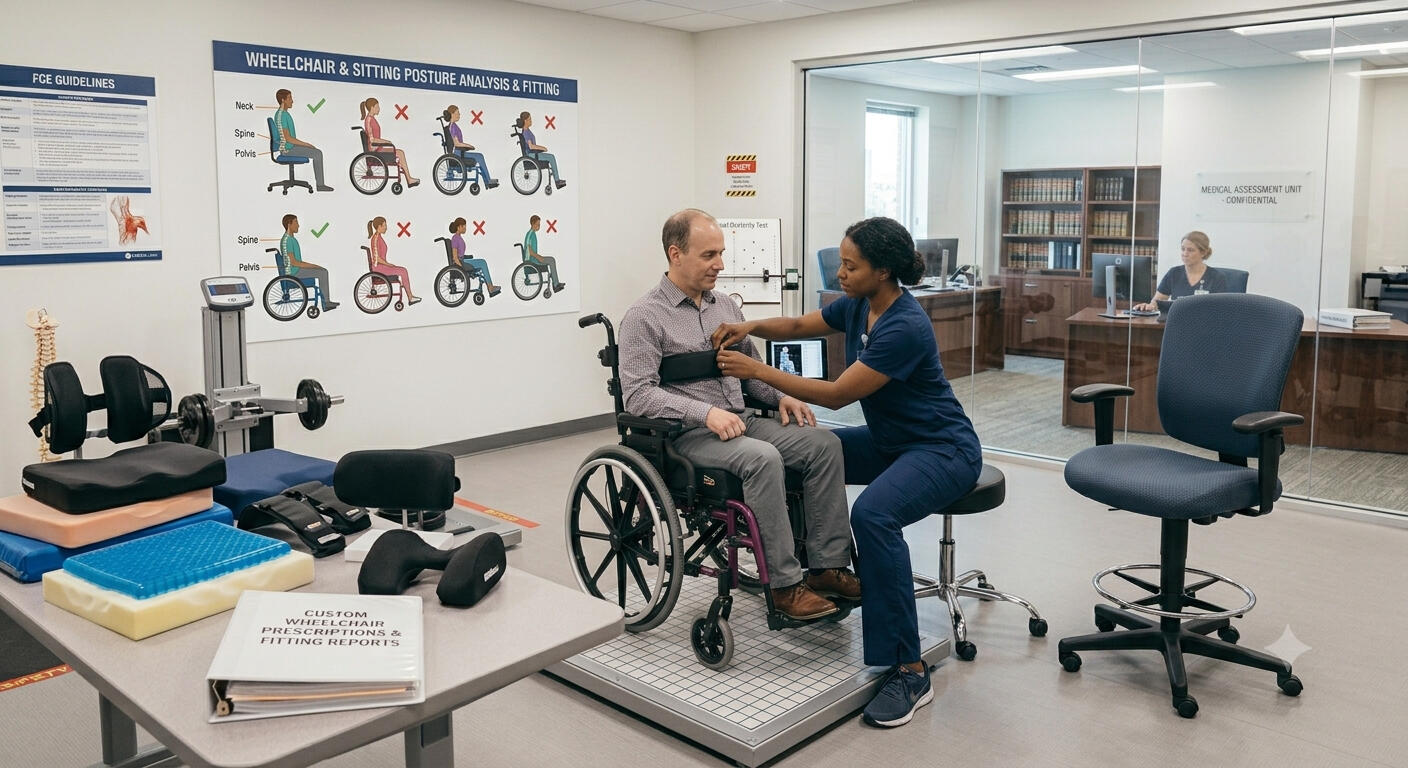
Promoting Comfort, Mobility & Independence
The right wheelchair and seating system can make a significant difference to comfort, posture, mobility and independence. Occupational therapy helps identify equipment and seating solutions that are appropriate for your individual needs.How Occupational Therapy Can HelpYour occupational therapist will assess factors such as posture, mobility, positioning, physical abilities and everyday environments.Recommendations may include wheelchair selection, seating adjustments, positioning supports and other assistive equipment where appropriate.Supporting Everyday IndependenceA suitable wheelchair and seating system can help you participate more safely and comfortably at home, work and in the community.Your assessment is tailored to your abilities, lifestyle, environment and personal goals.Book a consultation to discuss your wheelchair and seating needs.
Wheelchair Assessment & Seating
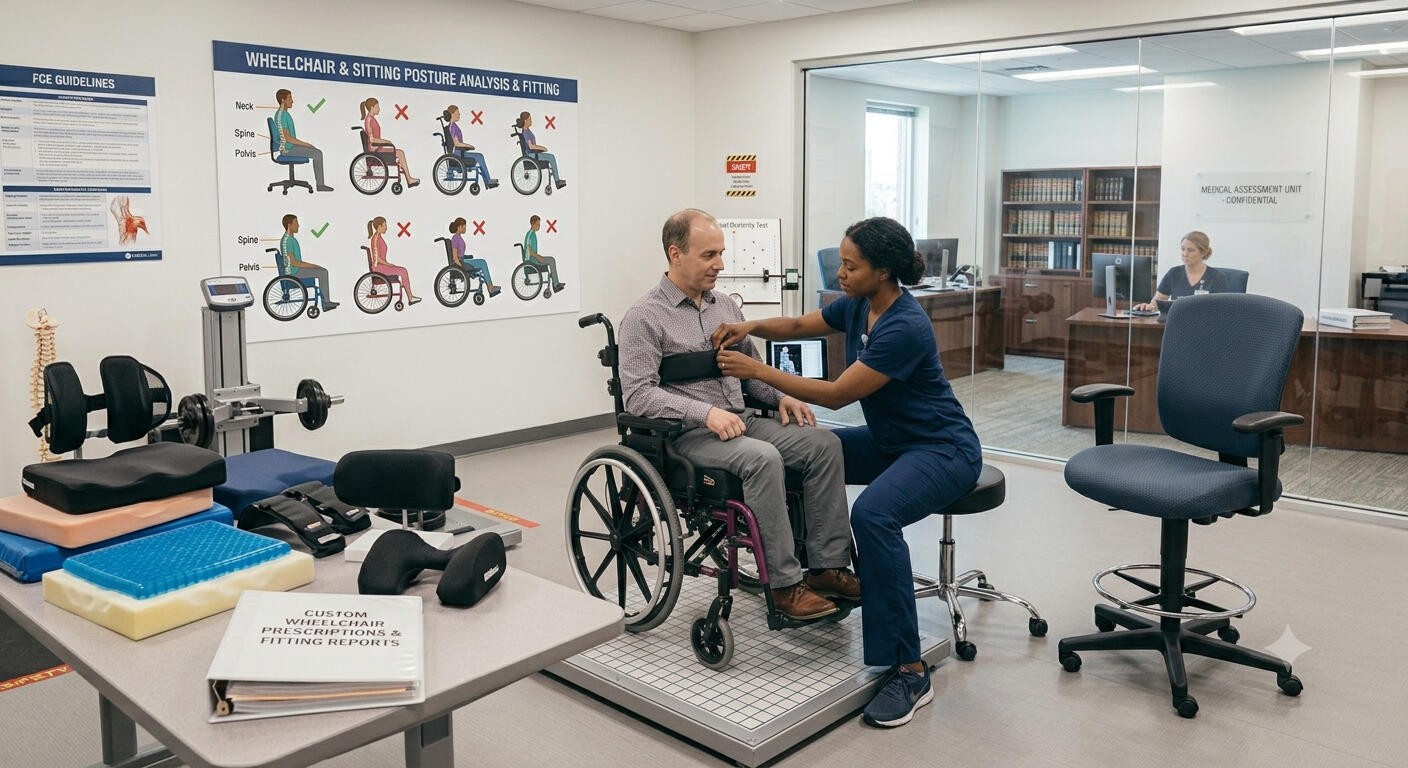
Promoting Comfort, Mobility & Independence
The right wheelchair and seating system can make a significant difference to comfort, posture, mobility and independence. Occupational therapy helps identify equipment and seating solutions that are appropriate for your individual needs.How Occupational Therapy Can Help?Your occupational therapist will assess factors such as posture, mobility, positioning, physical abilities and everyday environments.Recommendations may include wheelchair selection, seating adjustments, positioning supports and other assistive equipment where appropriate.Supporting Everyday IndependenceA suitable wheelchair and seating system can help you participate more safely and comfortably at home, work and in the community.Your assessment is tailored to your abilities, lifestyle, environment and personal goals.Book a consultation to discuss your wheelchair and seating needs.
Splinting
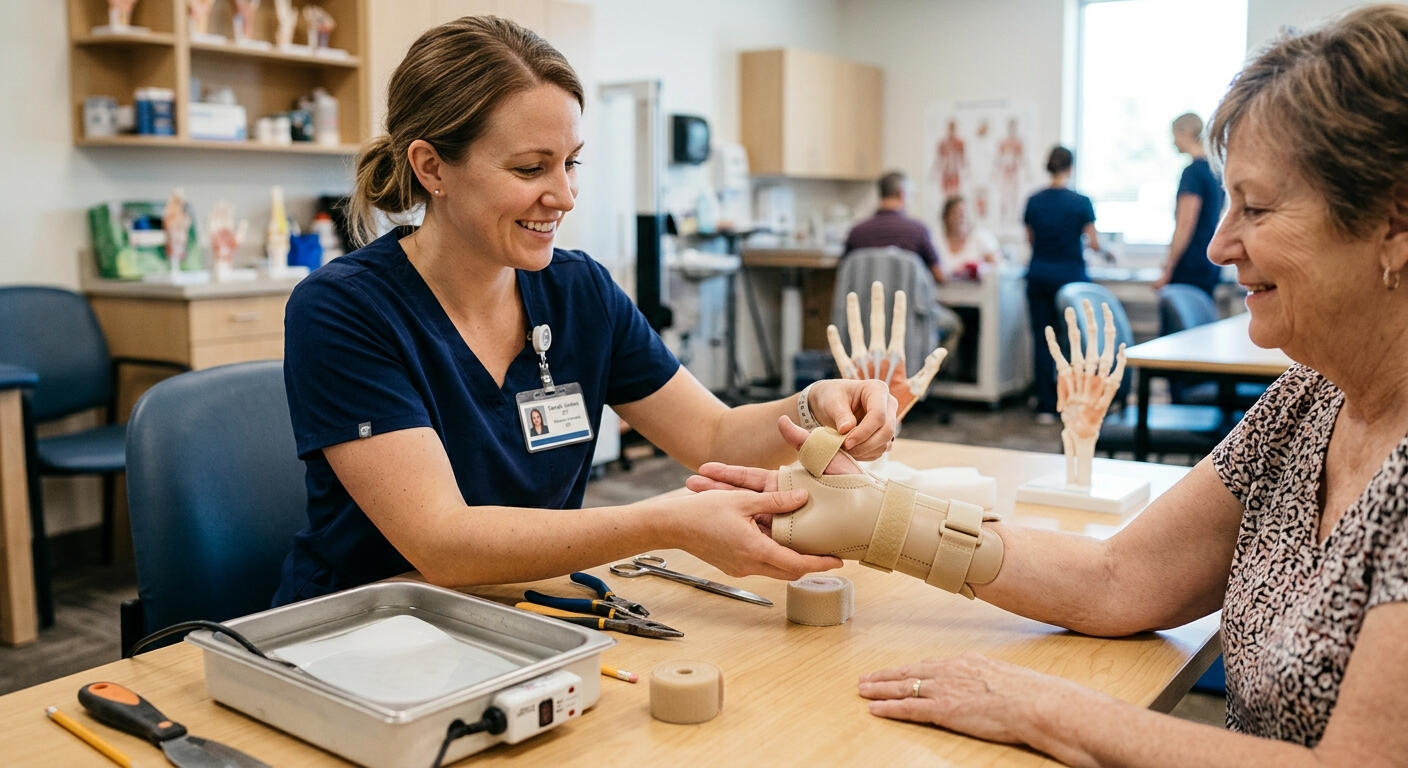
Supporting Function, Protection & Recovery
Splints can help support, protect or position affected joints and body parts following injury, surgery or as a result of certain conditions. Occupational therapy can assist in determining the most appropriate splint for your individual needs.How Occupational Therapy Can HelpYour occupational therapist will assess your movement, strength, pain and functional needs before recommending an appropriate splint.Splints may be used to support healing, improve positioning, protect affected areas or assist with everyday function.Supporting Comfort & FunctionA properly fitted splint can help make everyday activities easier while providing appropriate support to the affected area.Your occupational therapist will guide you on the use, care and management of your splint.Book a consultation to discuss your splinting needs.
Supporting Function, Protection & Recovery
Splinting
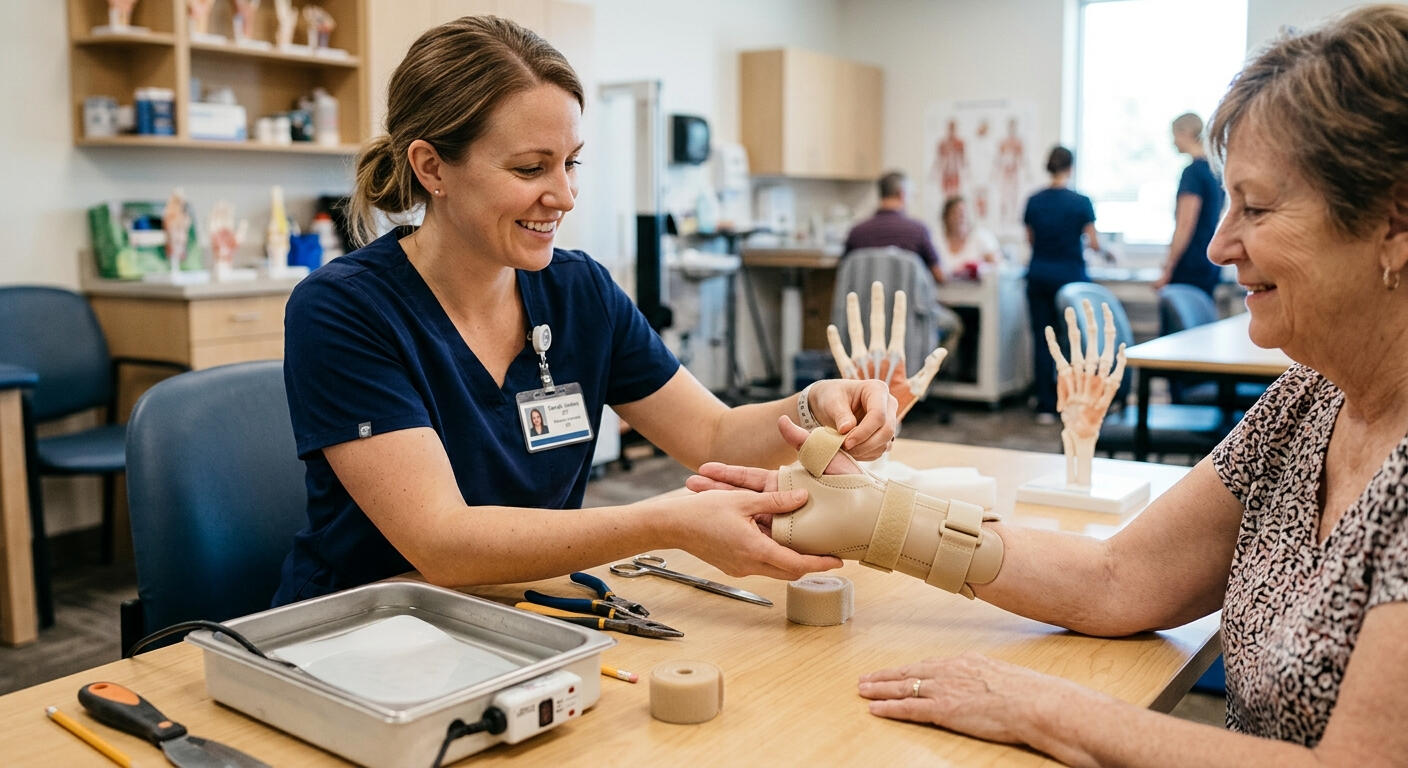
Splints can help support, protect or position affected joints and body parts following injury, surgery or as a result of certain conditions. Occupational therapy can assist in determining the most appropriate splint for your individual needs.How Occupational Therapy Can HelpYour occupational therapist will assess your movement, strength, pain and functional needs before recommending an appropriate splint.Splints may be used to support healing, improve positioning, protect affected areas or assist with everyday function.Supporting Comfort & FunctionA properly fitted splint can help make everyday activities easier while providing appropriate support to the affected area.Your occupational therapist will guide you on the use, care and management of your splint.Book a consultation to discuss your splinting needs.
Does My Child Need Occupational Therapy? Signs Parents Should Look Out For.

Children develop at different rates, but ongoing difficulties with everyday activities, learning or movement may indicate that a child could benefit from occupational therapy.Some signs to look out for include:● Difficulty with handwriting, drawing or using scissors
● Struggling to concentrate or complete classroom activities
● Difficulty dressing, feeding or managing other daily tasks
● Delayed developmental milestones
● Poor coordination or difficulty with fine motor skills
● Sensitivity to sounds, textures or movement
● Difficulties associated with ADHD, autism or cerebral palsyHow Can Occupational Therapy Help?Paediatric occupational therapy helps children develop skills needed for school, play and everyday independence.Depending on the child's needs, an occupational therapist may work on fine motor skills, sensory processing, coordination, attention, self-care and other functional abilities.The aim is not simply to improve one particular skill, but to help the child participate more confidently and independently in everyday activities.When Should You Seek Help?If your child's difficulties are persistent or are affecting their learning, development, confidence or daily activities, an occupational therapy assessment may help identify where support is needed.OT Angel Therapy provides occupational therapy services for children with developmental, learning, sensory and functional difficulties.Concerned about your child's development? Contact us to discuss an assessment.
When Does an Adult Need Occupational Therapy?

Occupational therapy can help adults regain independence when an injury, illness or disability affects their ability to manage everyday activities.You may benefit from occupational therapy following conditions such as:● Stroke
● Hand injuries
● Spinal cord injuries
● Traumatic brain injuries
● Arthritis
● Burns
● Neurological conditions
● Other conditions affecting daily functioningWhat Does Occupational Therapy Help With?An occupational therapist looks at how a person's condition affects the activities they need or want to perform.This may include dressing, cooking, writing, working, moving around safely or using the affected hand or limb.Therapy may involve rehabilitation, functional exercises, activity modification, assistive strategies or recommendations for adapting the person's environment.Why Is Functional Recovery Important?A person may leave hospital medically stable but still struggle with everyday activities.Occupational therapy focuses on these practical difficulties and helps identify ways to improve independence and participation in daily life.When Should You Consider an Assessment?If an injury, illness or disability is making everyday activities, work or independence more difficult, an occupational therapy assessment can help identify your functional needs.OT Angel Therapy provides adult occupational therapy services tailored to individual rehabilitation and functional goals.Need support with your recovery? Contact us to discuss your occupational therapy needs.